

Stop Weeds From Growing In Concrete Cracks For Good With This One Simple Remedy

It can seem like weeds are a never-ending nuisance. They are especially annoying when you find them growing through the cracks of your yard's concrete structures. Whether it is that small crack that formed in the patio over winter, or the expansion joints of your walkway, weeds will find a way to make their presence known. In order to stop weeds from growing for good in the concrete cracks, you have to make sure that you seal them up so that the weeds don't have a chance to pop through.
To seal the cracks in your concrete, you will need to use concrete repair products like flexible concrete caulk. This will stick into and fill the expansion joints and any cracks that might be present in the concrete. This caulk leaves no room for weeds to grow, and eliminates access to any sunlight they were reaching for through the cracks.
Now, caulk works really well for those smaller cracks, but if you have a more pervasive problem, other concrete sealants work just as well. Epoxy is great for larger cracks and is durable enough to withstand a lot of abuse from foot traffic and weather. Then there is joint filler, which is by far the most flexible option as it provides the necessary covering to prevent weeds, while also allowing for movement without breaking. This is best used for concrete slabs as opposed to paved walkways.
Best methods for sealing concrete cracks
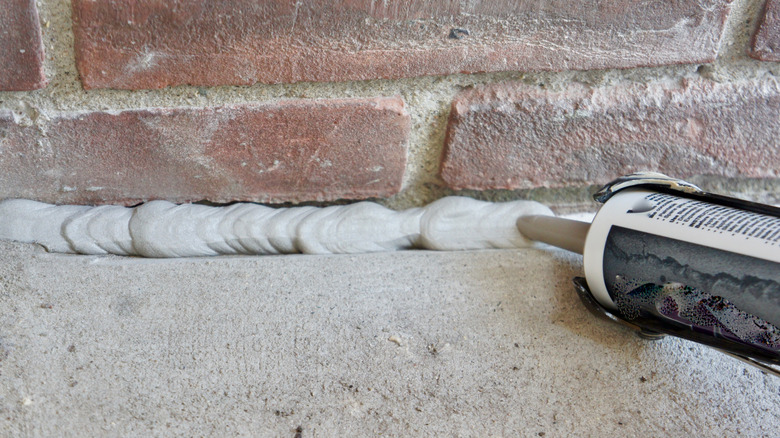
Now, it is important to understand that filling a concrete crack is not necessarily as easy as it might seem. There are many common mistakes you can make when repairing cracks in concrete. One of them is using mortar to fill small breaks. Mortar should only be used to repair deeper damage. In small breaks, it will deteriorate quickly and create new cracks that weeds will happily grow out of.
First things first, you need to make sure the weeds are good and gone. Fall is an excellent time to control these stubborn weeds because they are already dying off and will be easier to pull, and the temperatures are still high enough for the caulk to dry and adhere to the break. Ensure you clean the area thoroughly using a power washer, then wait for the area to dry before you go in with your caulking, or else it won't seal up properly.
Now, most small cracks or expansion joints will be easy enough for you to repair on your own. If there are larger signs of damage, such as long, deep cracks, signs of structural damage, or significant deterioration, you will need to call a professional. Extensive damage is more than just about weed control, and professionals have the knowledge, experience, and tools necessary to fix your concrete structures and seal them against weeds and further damage in the future.